COMING SOON
Nomadian Beta Launch
Dec 15, 2026 (Tue) D-day

Trigger. Process. Action. Orchestrated as One.Hancom Orchestration Grid.
A node-based workflow automation platform that connects without code —
linking triggers, data, documents, and AI in a single canvas to automate repetitive work.
Orchestration Grid
connects everything you need for automation on a single screen.
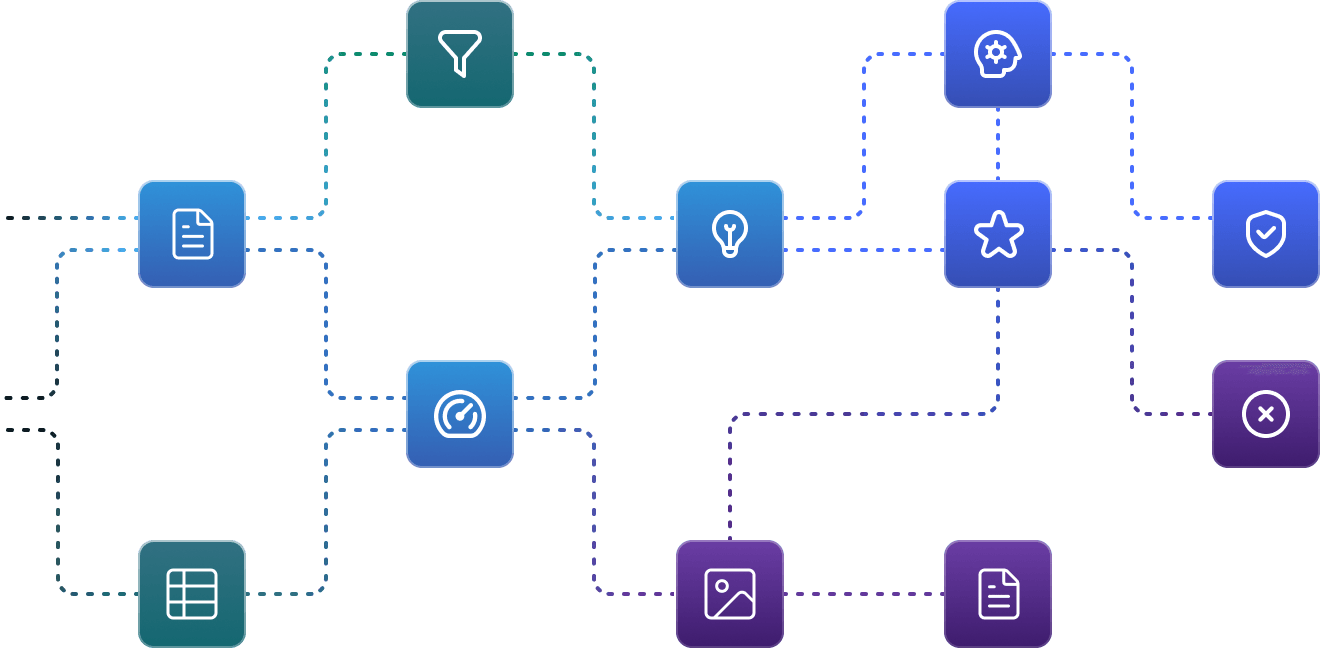
Visual workflow
Supports intuitive drag-and-drop node design and custom code. A full editing environment with real-time node debugging, log tracing, version control, and auto-layout to raise development productivity.

Agentic AI
Multi-LLM and MCP-standard-based, supporting diverse analyses such as text classification and extraction. AI agents combine judgment and execution — including real-time tool calls.
From start to operation, in a single canvas
Experience everything you need for automation.
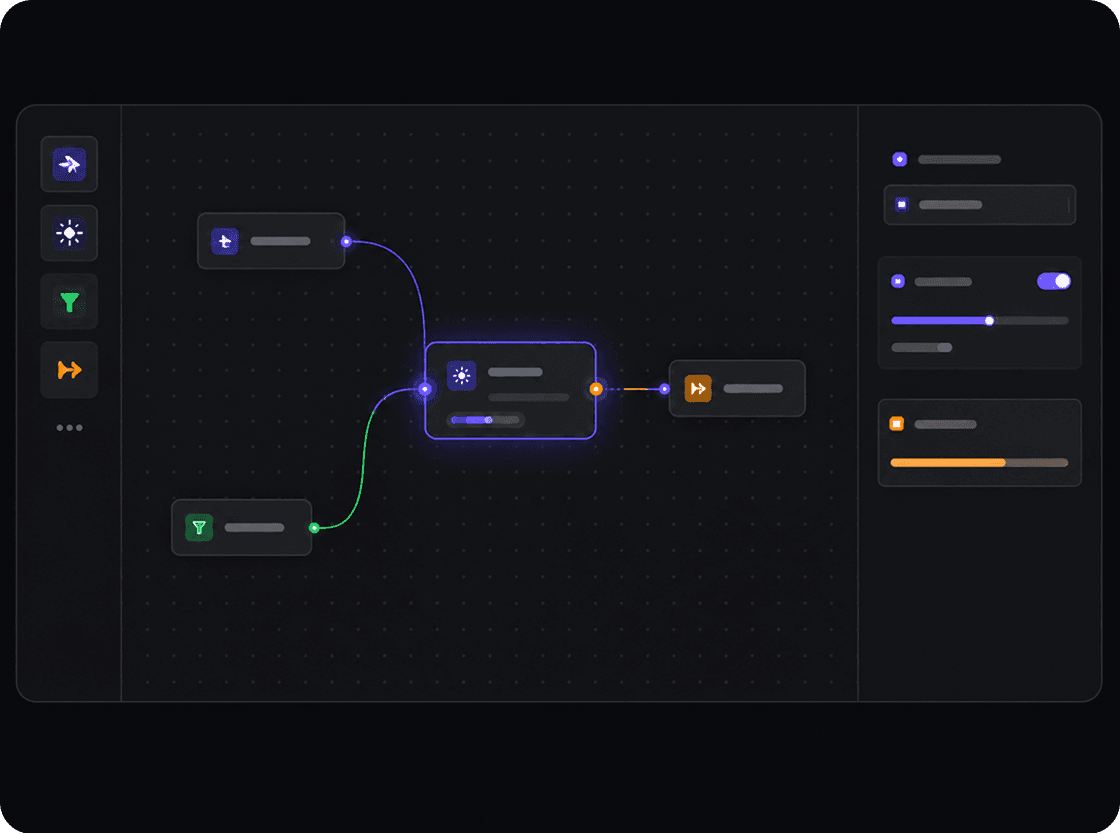
Visual canvas editor
Connect nodes with lines from the node palette, then control input, settings, and output at a glance in the detail panel.
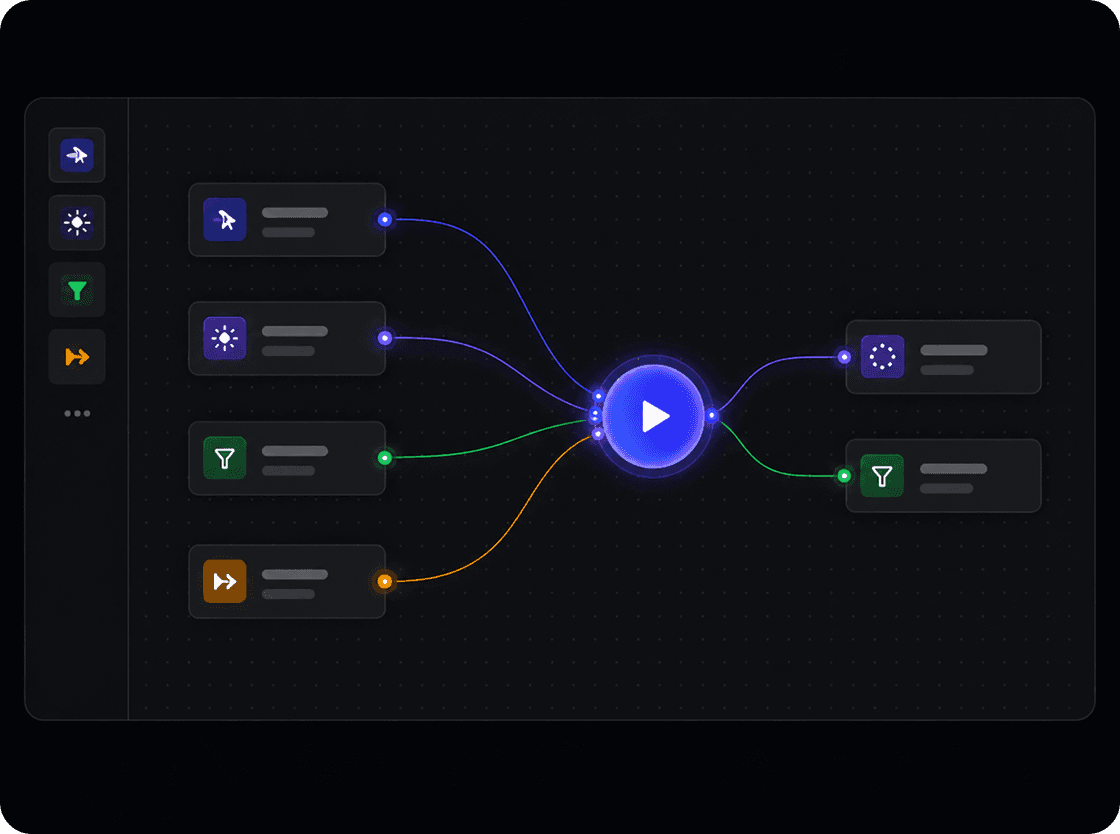
Runs and run history
Run a single node, run the entire workflow, and review results and history to verify outcomes.
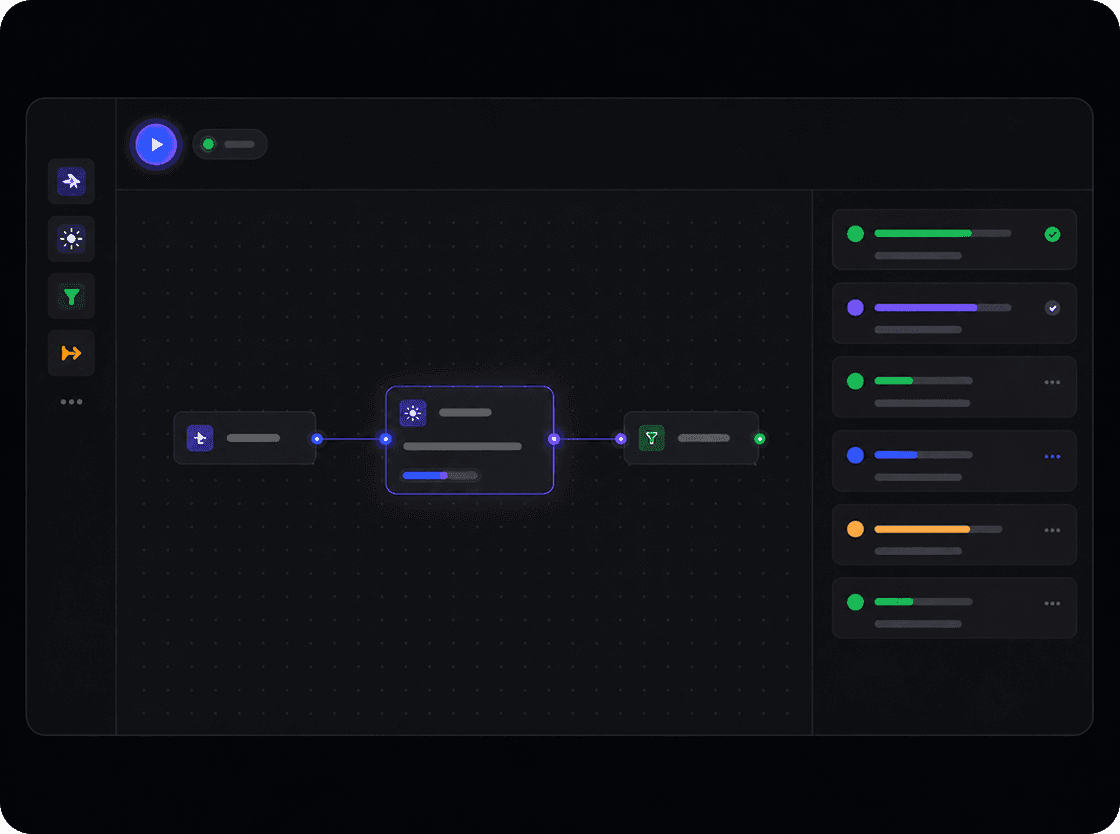
100+ node ecosystem
Triggers, data processing, documents, external integrations, AI — every block you need is already available.
Schedule, webhook, and form triggers
Start flows on a schedule, external HTTP call, user form submission, or email and file events.
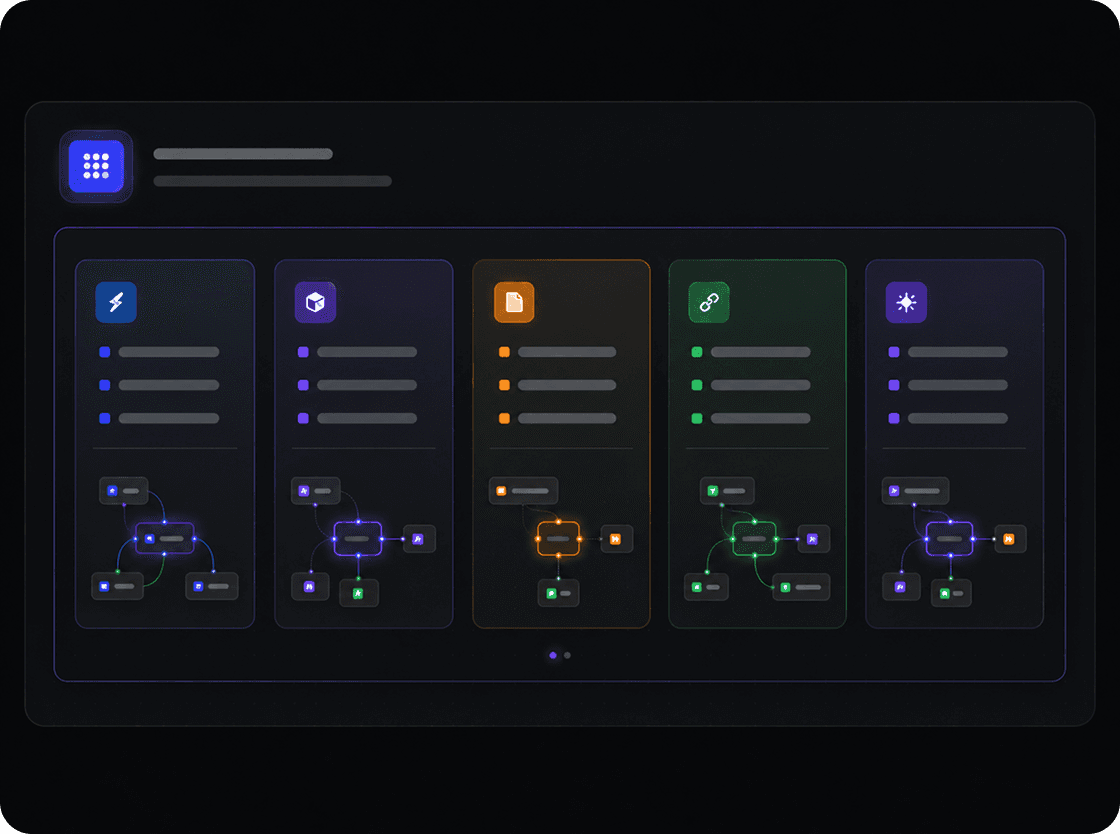
Three steps without code
Automates every task.
Add Orchestration Grid to existing work
and automate your workflows.
Onboarding inquiry AI classification
AI automatically classifies new-hire inquiries by topic and assigns them to the right person.
Webhook · Form
Info extractor
Text classifier
Google Chat
Company vehicle schedule alerts
Checks reservations daily and automatically notifies the responsible person one day before use.
Schedule trigger
Google Sheets
Field setup
Email · Messenger
Team out-of-office alerts
Aggregates leave and out-of-office information and posts today's status to the team channel.
Schedule
Google Calendar
Aggregate
Google Chat
Document-based approval processing
Extracts key values from uploaded documents and PDF forms, then branches to approval or rejection based on conditions.
File trigger
Office · PDF parsing
Info extractor
Switch branch
AI-drafted customer support replies
Analyzes incoming inquiries and generates a first-draft reply based on the knowledge base.
IMAP email
Sentiment analysis
Chain LLM
Email send
AI-selected recognition relay
AI evaluates and selects submitted recognition posts, then automatically announces the results.
Form
AI Agent
Conditional branch
Webhook response · Announcement
So it runs safely inside your enterprise security perimeter
The engine is embedded directly inside your enterprise Java product.
Comparison
Deployment and architecture
Extension node safety review
Real-time permission gate
Policy-based AI control
Credential protection
Typical automation tools
(n8n, etc.)
Runs only on separate servers (Docker, etc.)
Ad-hoc library additions by developers
Static role-based (RBAC) permissions only
LLM-driven tool calls and unmanaged memory writes
Errors returned at runtime with leakage risk

Orchestration Grid
Engine embedded directly in the host JVM
5-step file integrity and conflict inspection
Instance, team, and ownership composed dynamically at the moment of execution
Pre-validated tool calls and proposal-based memory updates
Blocks access before checking the state of vault-stored values
Seamless connectivity through direct embedding (Java Embed)
Builds the engine directly inside internal Java products with no external automation server — connecting workflows, AI judgment, and proprietary functions within a single boundary and without latency.
Strict node lifecycle control and 5-step security review
Only nodes that pass the 5-step review pipeline are allowed to register. On failure, new runs are blocked immediately and in-flight tasks are isolated from memory in real time after completion.
Permission and security control right before execution
Combines user, ownership, and node permissions in real time just before execution. If even a single deny rule is detected, the process is stopped immediately to prevent security leaks.
Safe policy-based AI agent control
When AI calls external tools, source and session ownership are verified to block autonomous writes, and AI proposals are only applied after the system's final policy check.
Runtime security and credential protection
Controls script execution within a secure Java sandbox, and detects invalid or expired API keys before they are read from storage to preemptively block them.
A security and control system
that meets enterprise compliance.

On-premise · closed network
Operates in environments isolated from the internet, and with self-hosted Ollama, AI itself runs inside your perimeter.
User and role management (RBAC)
Administrators manage users and roles, controlling permissions for workflows and features in fine detail.
Audit log
Execution history and data access are recorded to support regulatory compliance and internal control.
Credential vault
API keys and secrets are safely stored, and only their names are shown on-screen for secure integration without leakage risk.
System status · server logs
Check system status from the admin console and review the server log archive.
Multi-LLM flexibility
Swap commercial, open-source, and self-hosted models as needed, eliminating vendor lock-in at the root.
Frequently asked questions